Project Brief
This project investigates a non-digital service design solution to lower student commuting expenses between campus and the city while guaranteeing autorickshaw drivers steady pay. It focuses on using a straightforward, inexpensive physical system to align stakeholder incentives.
Type
Course Work | Service Design | Semester 5 | IIIT Jabalpur | Solo
Creating a seamless auto rickshaw service that reduces travel costs while benefiting both students and drivers.
About the Project
It was a Semester Project where we had to work on a service design model which would solve a major problem in our university.
One of the problems was Autorickshaws were charging 200–250 rupees to take you to the city and vice versa. Our university was in Jabalpur but was 10–12km away from the main city.
We had make the charges come down make it profitable for both the students as well as for the autorickshaw driver.
Though there were bus services available in our campus it were just there for specific times in a day.
Problem Statement
To build a model in such a way that the auto rickshaw drivers coming to campus would have a customer ready which would make it profitable for the driver as well as the student.
Basically they can just charge 100 rupees for student coming to campus from city and when going back they charge 100 again to the students who are going to city. This way it is profitable for both the parties.
If the autorickshaw driver wants, they can even charge around 120 for a even a extra gain of 40 rupees on the regular fee and its still a profit of 80 rupees for the students so they won’t mind it either.
But the big question is
”How will you make sure that the autorickshaw driver always finds a ride when he is going back to city?”
And obviously we cannot build a app or any digital service as that defeats the whole purpose of the service design model where you have to make profit for all the stakeholders involved and this won’t be close to any profit for the university for the scale of problem it is.
So we thought taking a step back and trying to build a physical service model which still exists in India in all campus mostly be it any kind of service which is being provided. From taking attendance to registering for mess food.
So I went to drawing board and tried all the hypothesis which can make a seamless user experience for all the stake holders involved.
Stakeholders
College — for providing the service to the students and for the auto driver so the cost can be brought down.
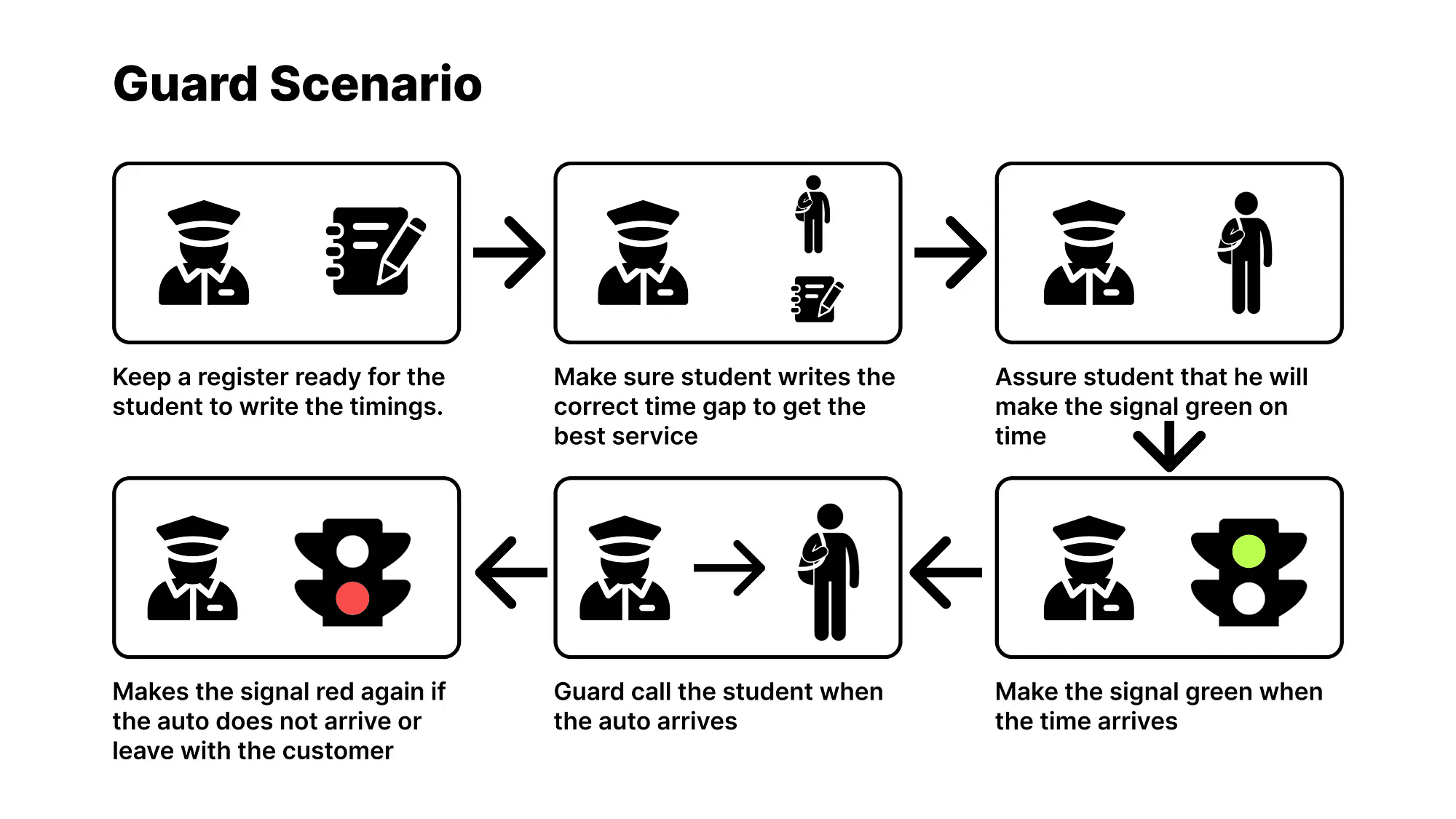
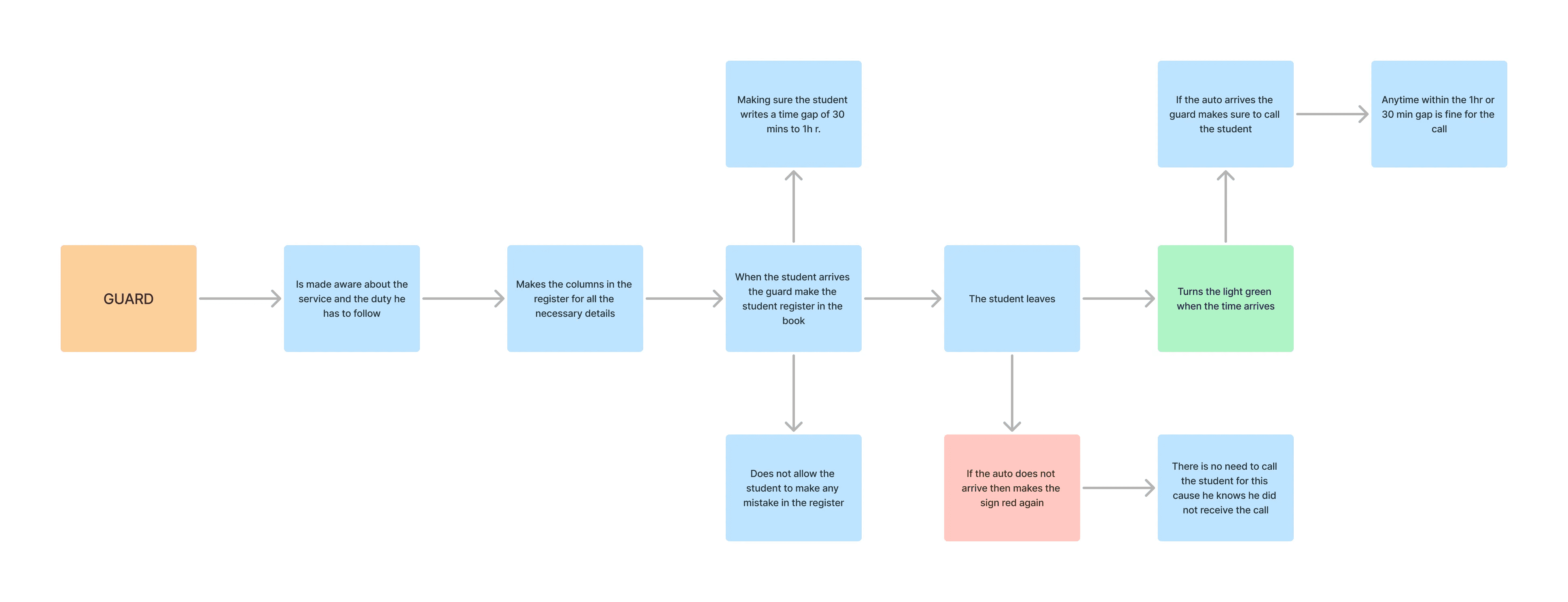
Guard — Making sure every student notes down the time properly and then making sure he calls the students whenever the auto arrives.
Student — Being the customer when the auto is going to return to city.
Auto Driver — Providing the service of transportation.
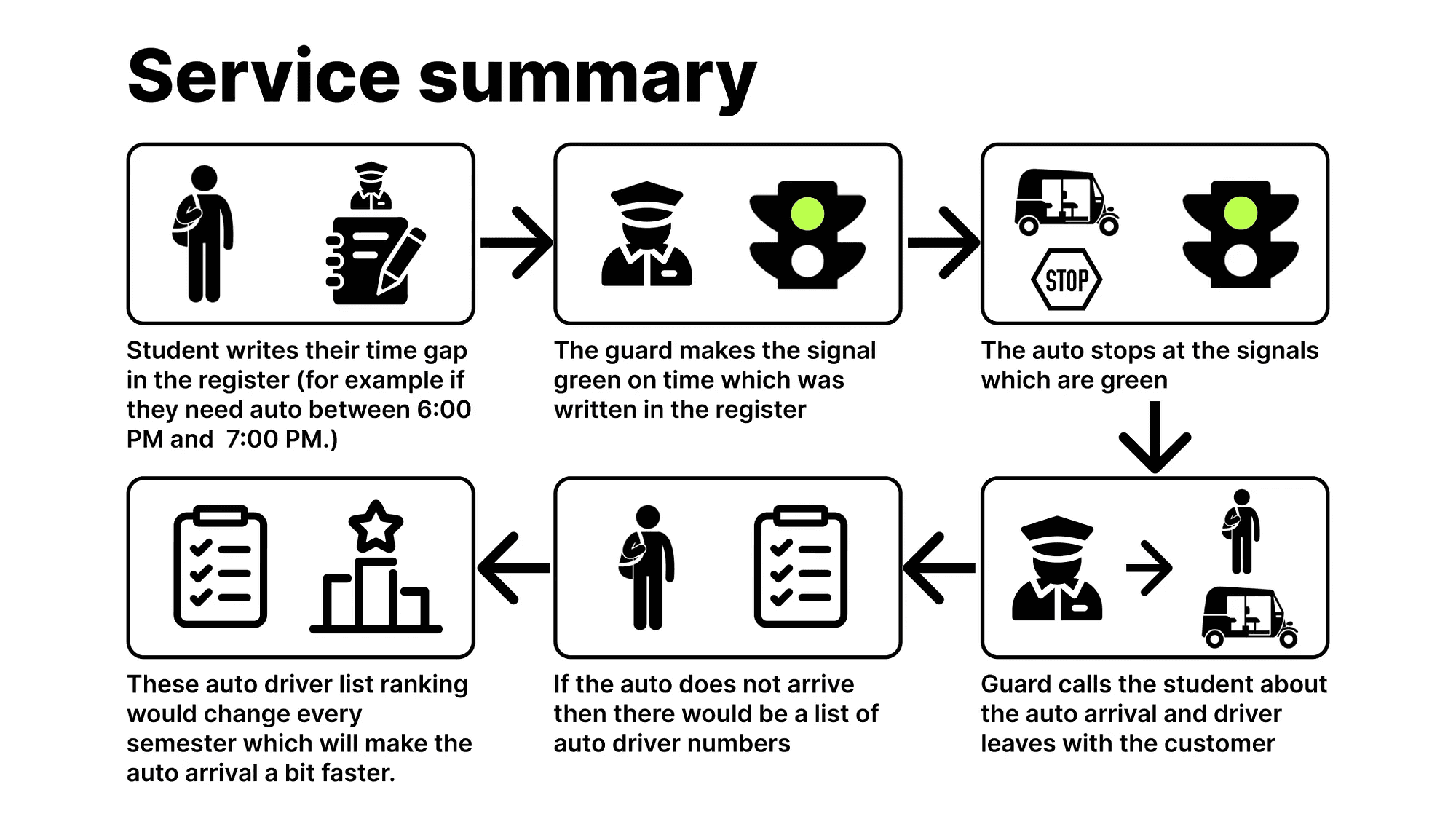
First lets discuss the solution in nutshell
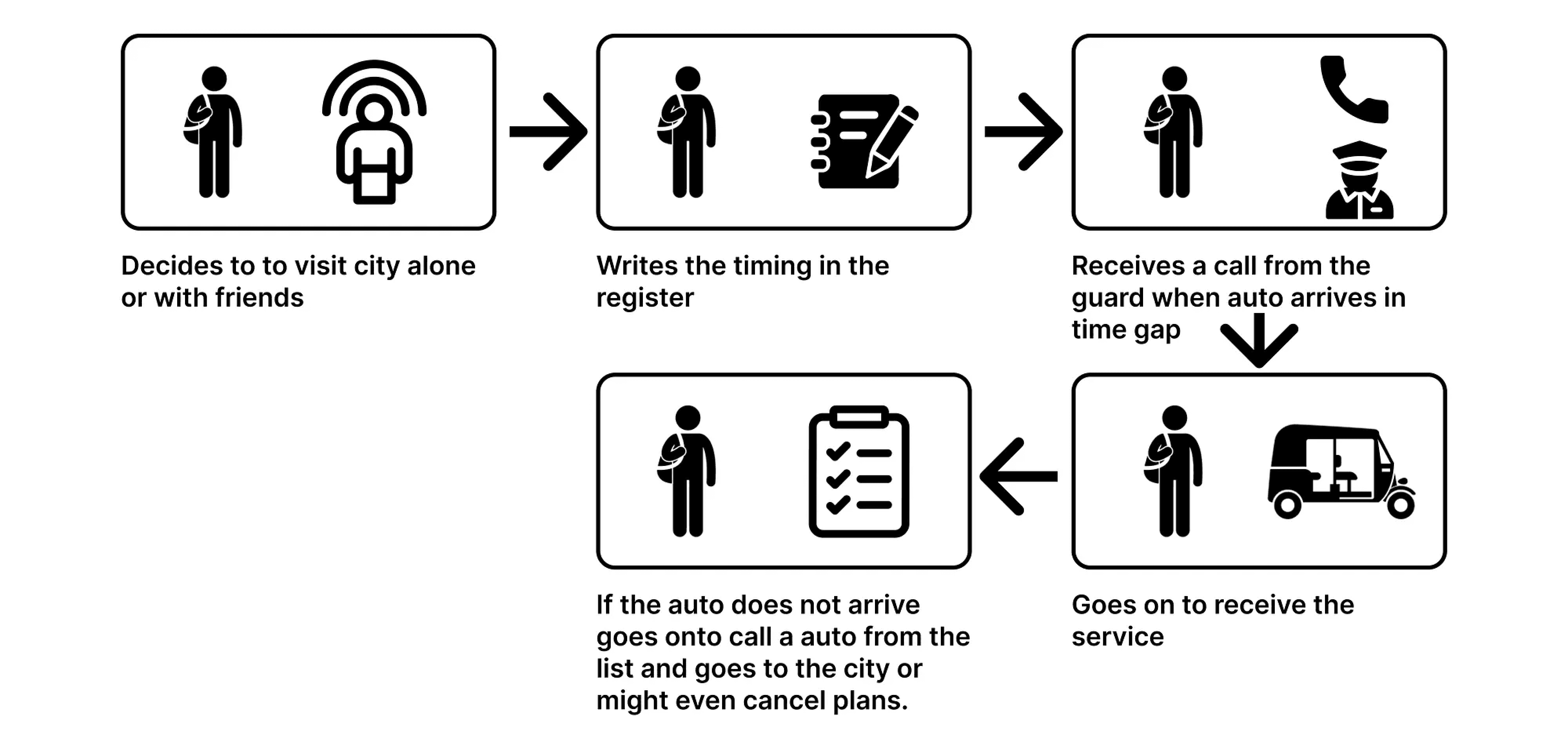
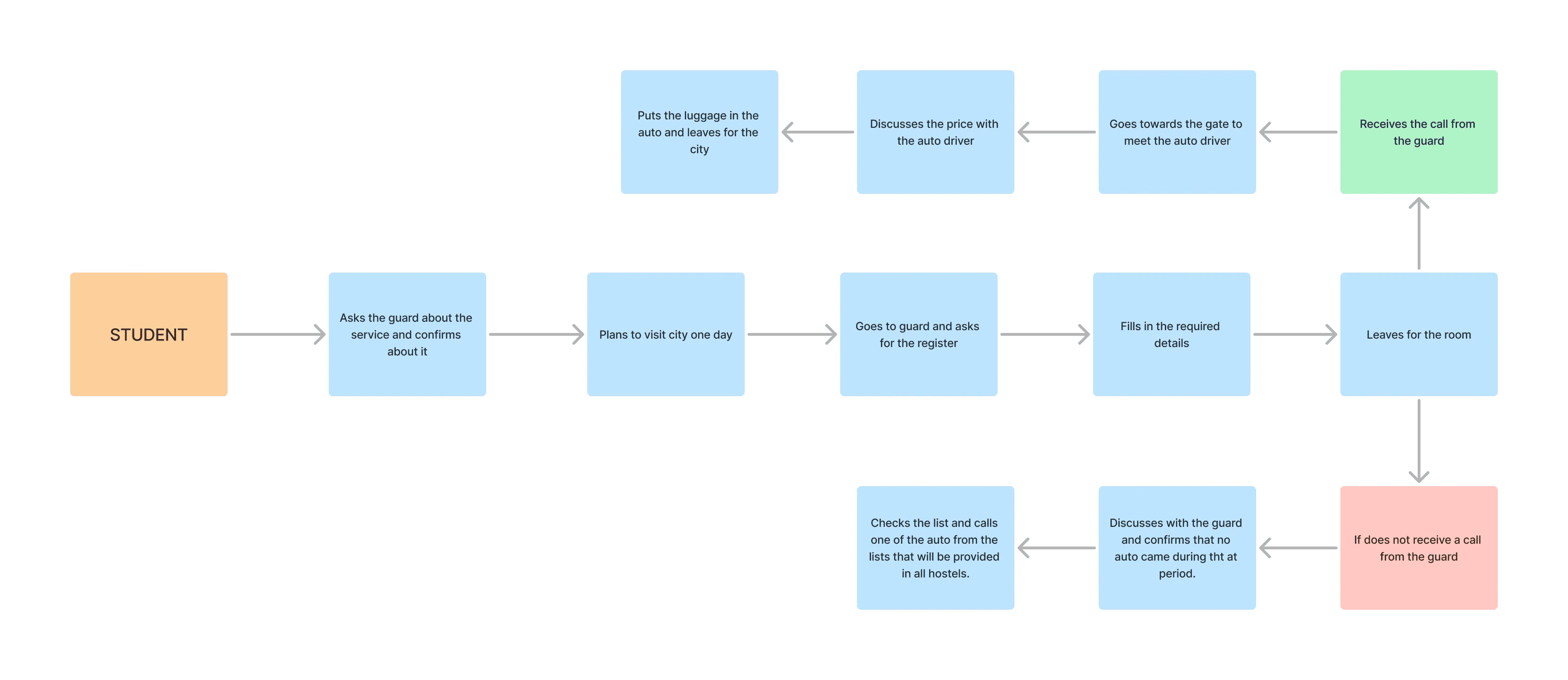
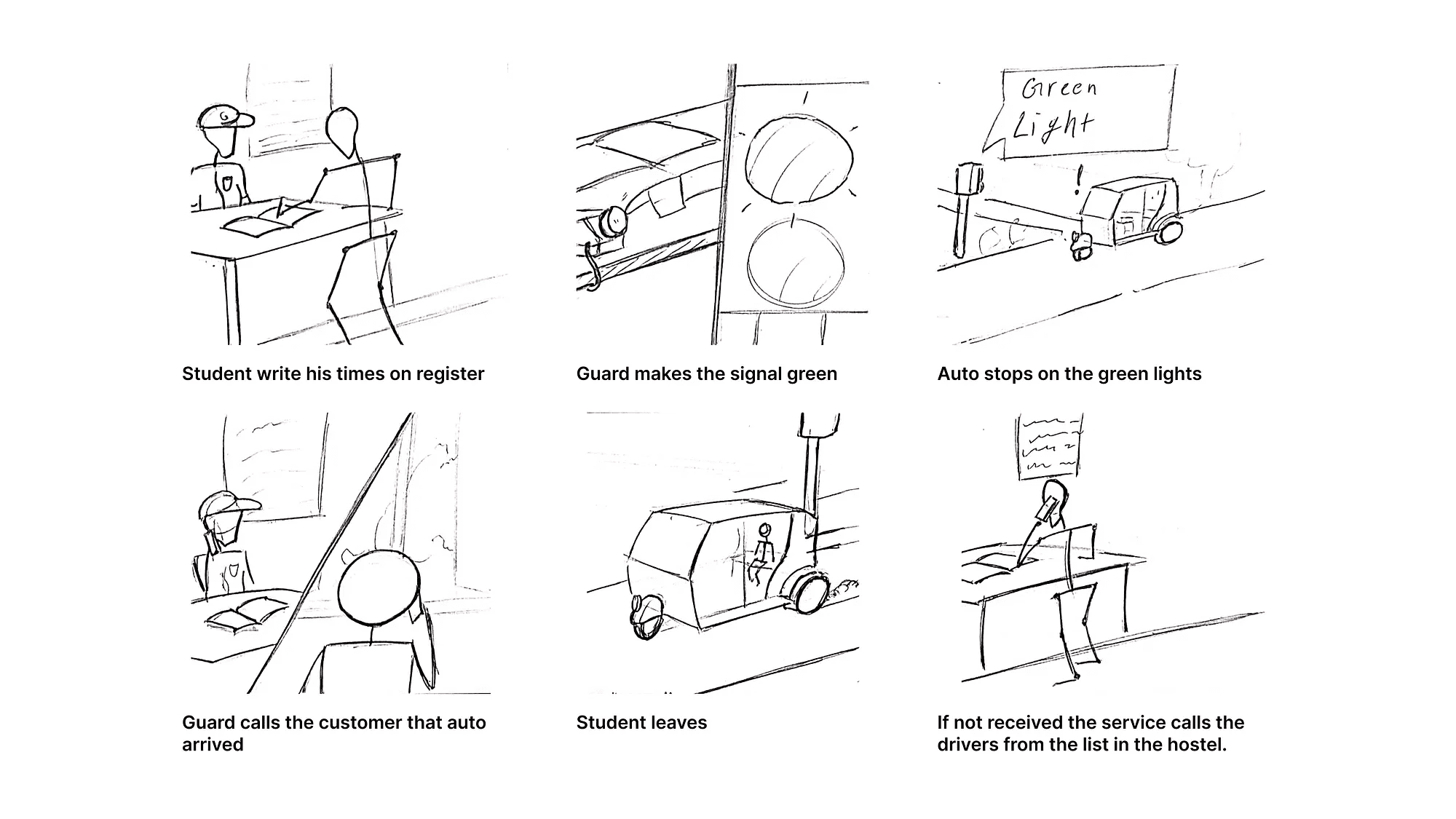
Student gives a time period to the guard with in which he/she want the auto to arrive in the register and also their phone number.
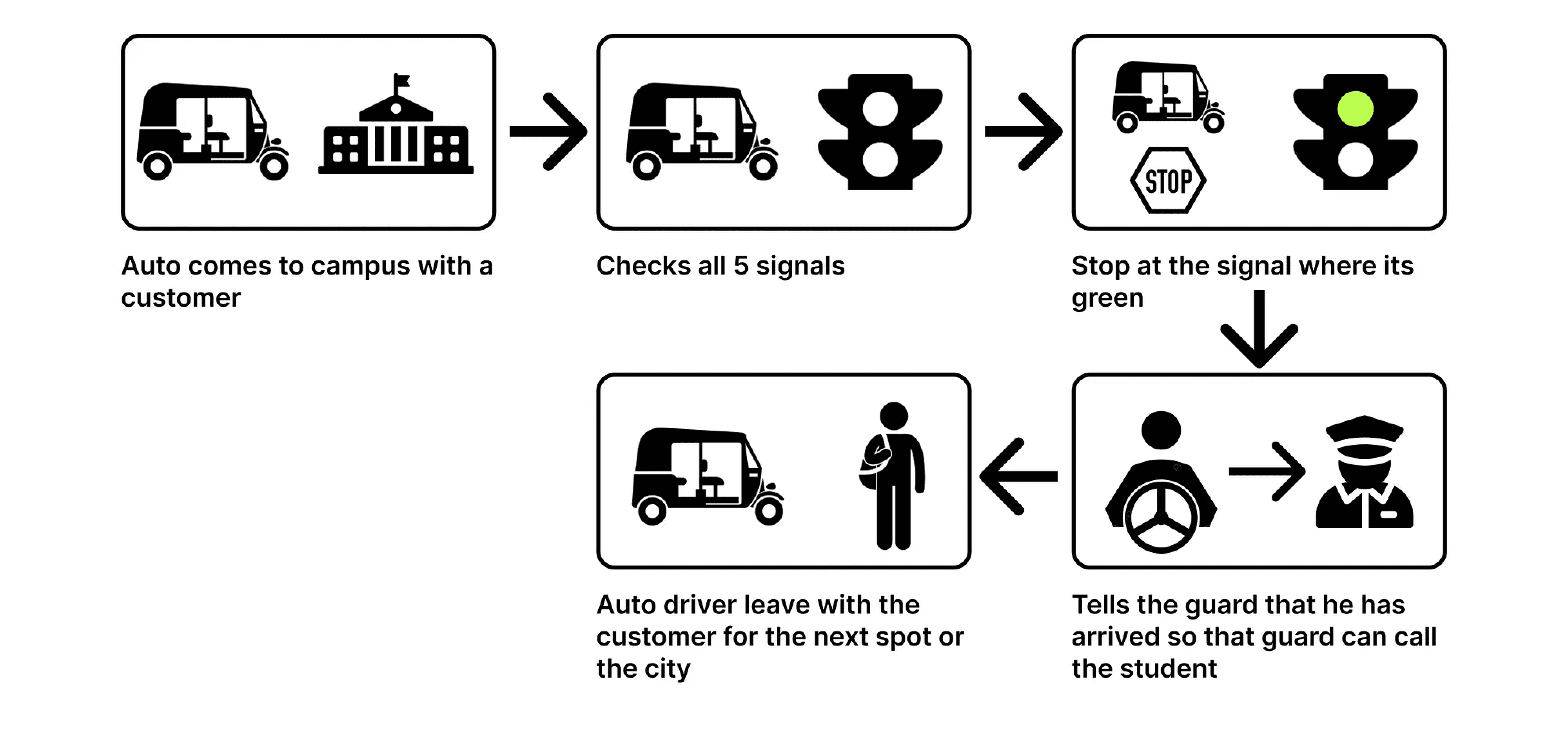
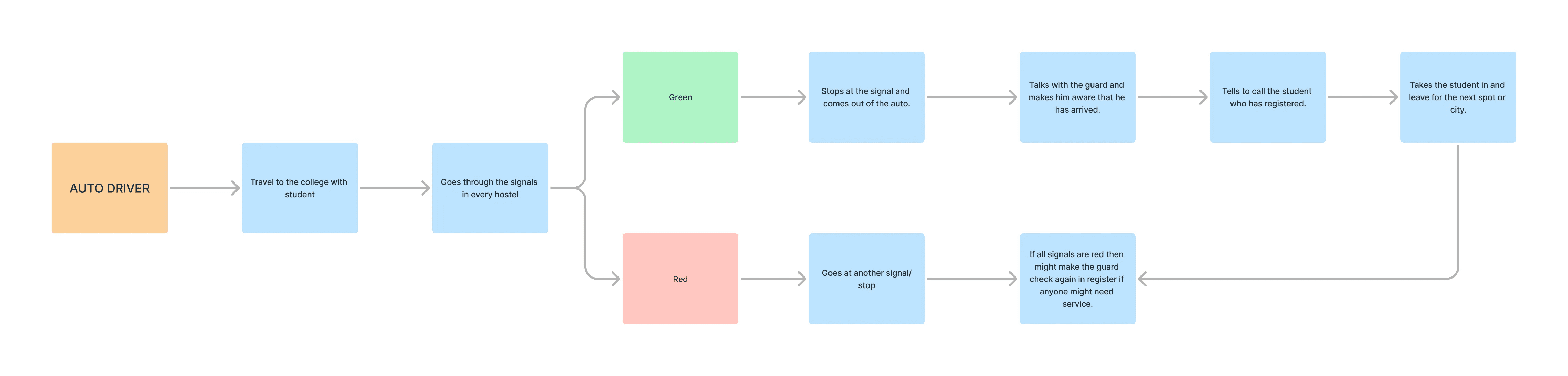
The guard make the signal green with in that time period and if any autorickshaw comes in the campus with in that time period they will stop at the green signal.
The guard calls the student if the auto arrives.
There would also be a list of auto drivers services with all their numbers and the ranking of them would keep changing upon the feedback from students and how good of a service they provide.
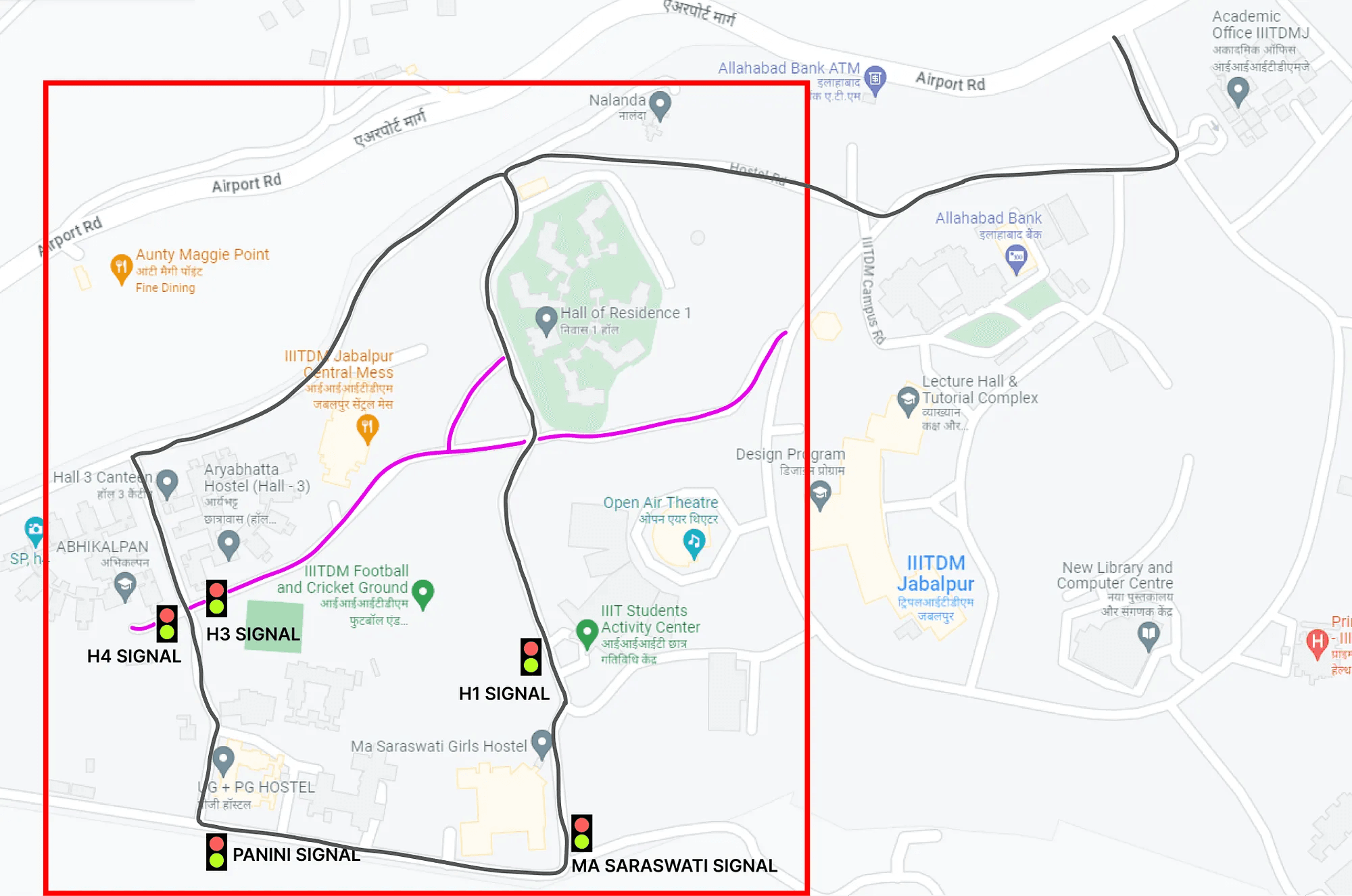
Understanding the map
There were in total 5 hostels in our campus for the students.
Hostel 1
Hostel 3
Hostel 4
Panini Hostel
Ma Sarasvati Hostel
Grey color — Main road which can be used by the autorickshaw
Pink color — Footpath area where vehicles are not allowed
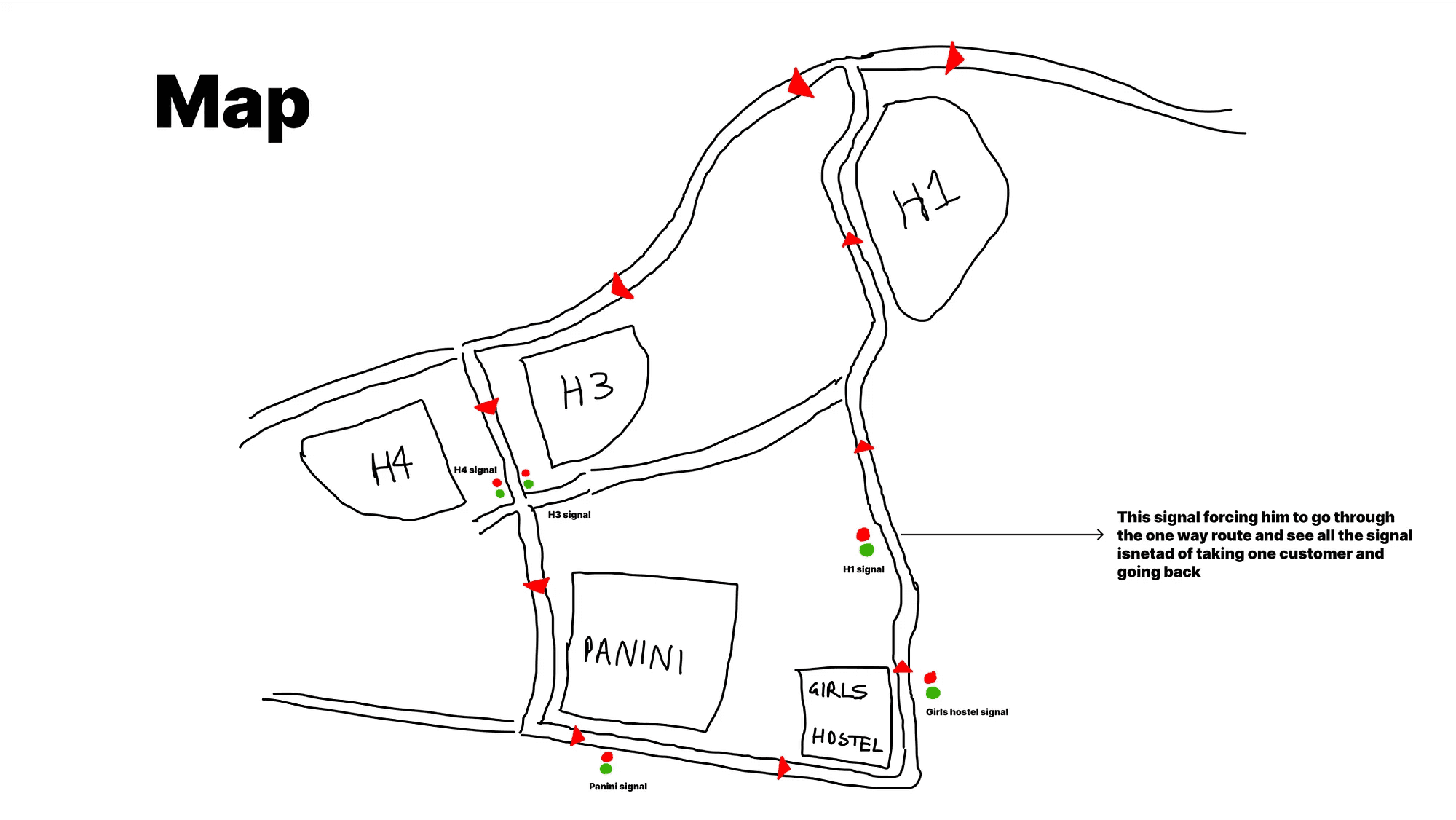
This is the path that we want the autorickshaws to follow. We tried to keep all the signals close and on signal visible after the other one so that the autorickshaw driver does not leave after taking customers from just one hostel. This way it might even get more cheaper for the students.
The Hostel 1 signal is kept far away so that the autorickshaw driver is forced to follow the path we have chose for them as H1 now comes after our signal in our path.
Even all the advertisements which are scattered around all over the campus… Its just better to have a list of all the different rickshaw services in all hostels with the phone numbers with a monthly ranking system.

Different Scenarios
Scenarios for 3 stakeholders that are involved
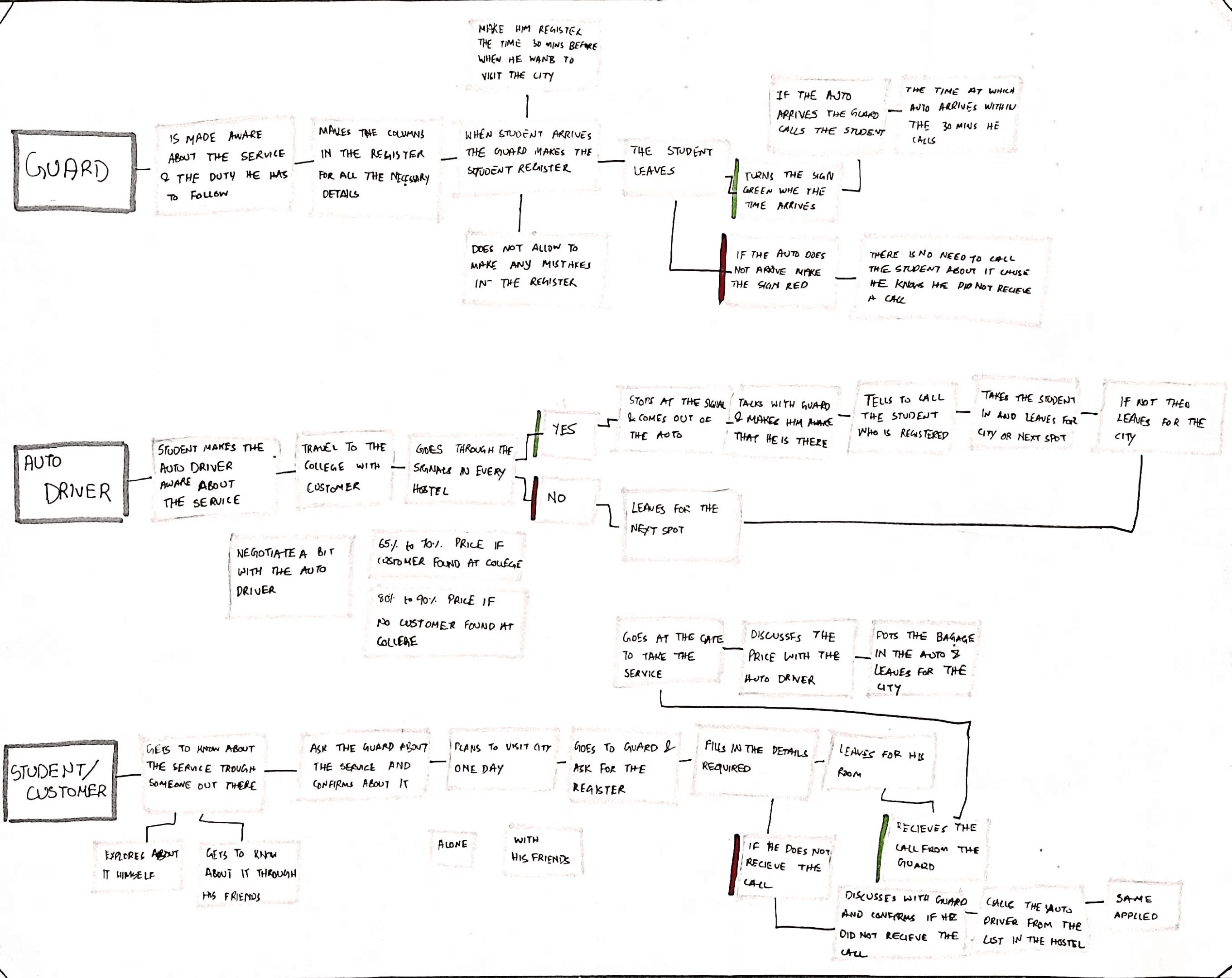
Autorickshaw Driver Scenario
Student Scenario
Guard Scenario
Storyboard
Component Cost
All the components involved are only button to act as a wireless receiver for the signal and just register and pen.
While me might see some human errors be it from any stakeholder but then again no design has ever faced human error.
And that's the end!
Though this was a hypothetical situation that I worked on still I learnt a lot on how to look at problems in a different way and how you should not stick top one particular method used by everyone.
You can keep iterating on the different point of view you have and you will find the solution that you might not have been even looking for but works perfectly for all the users.
Also got a lot of insight on service design and how you find solutions in each and every step and how important it is to cut the cost in every step possible.